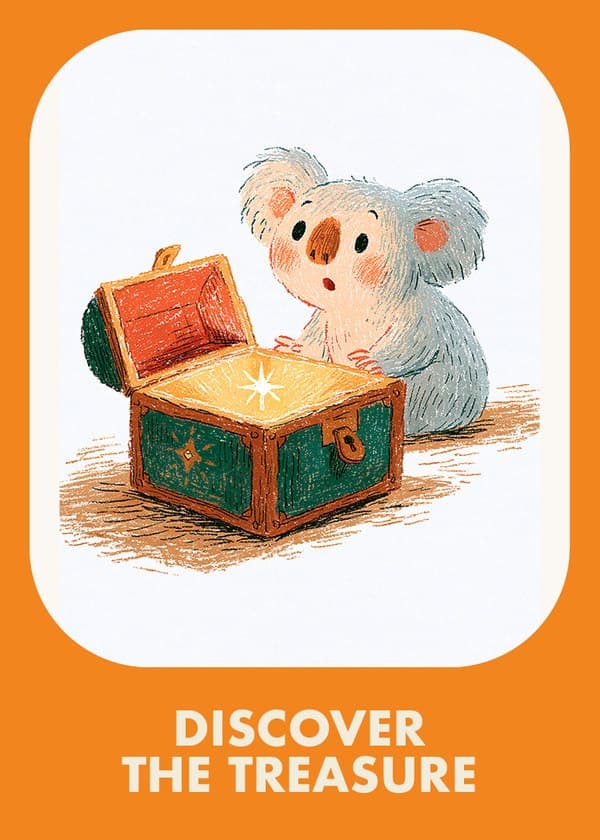
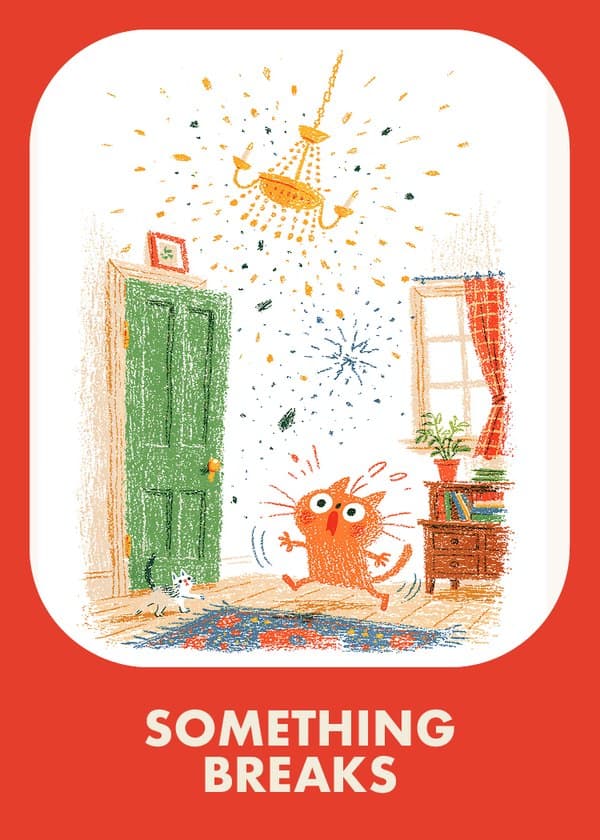
36 story cards
Five categories, color coded. Poker size, so small hands can hold them. The cards are a jumping-off point, not a rulebook.

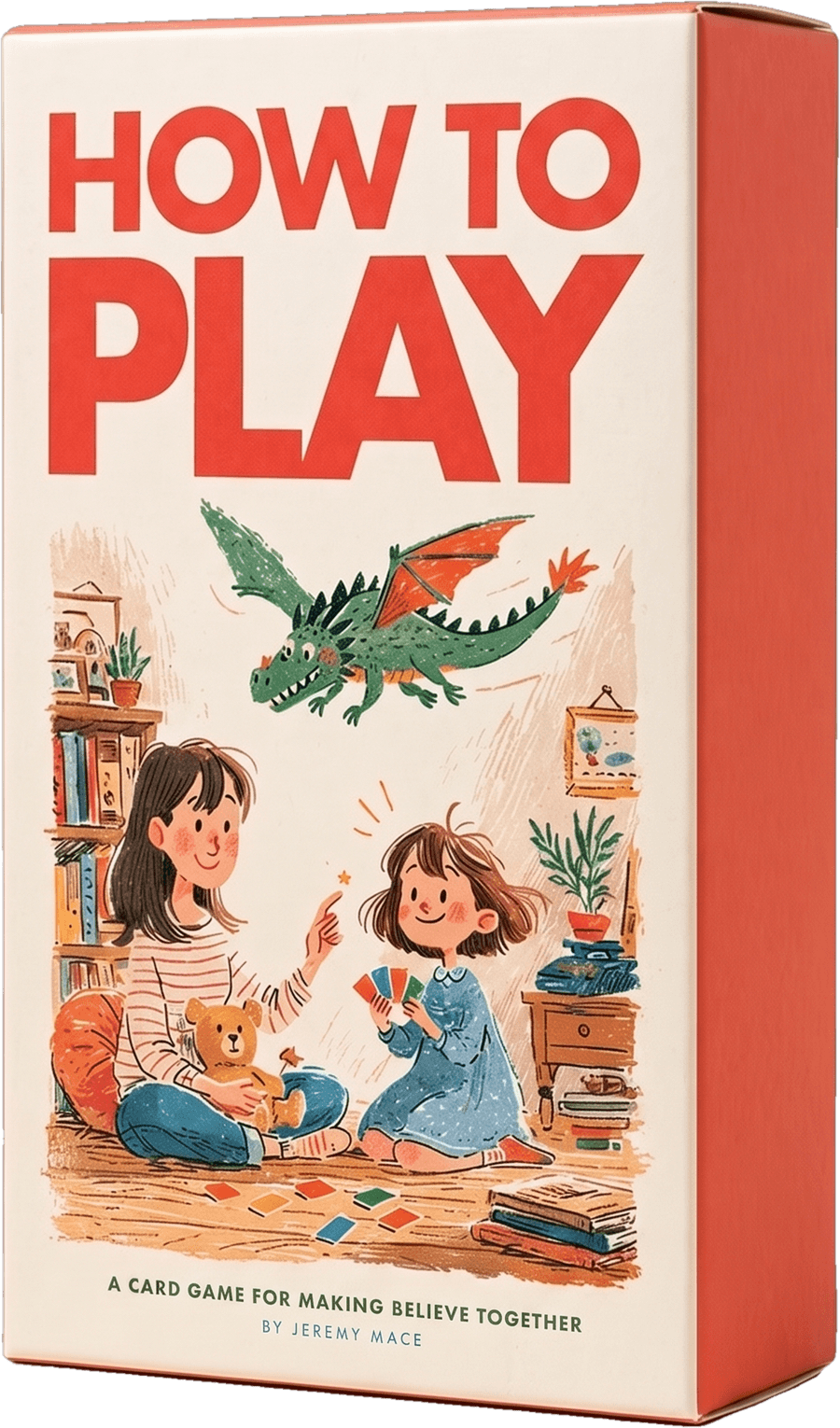
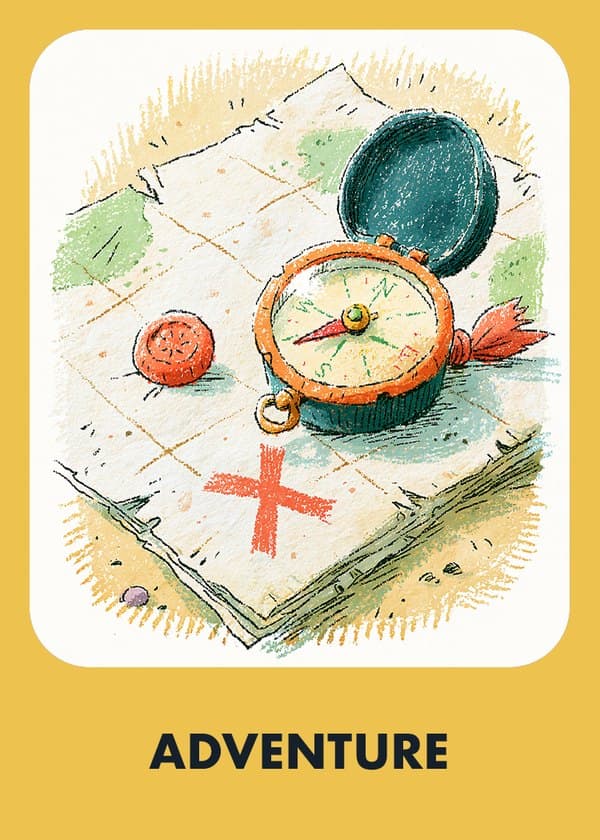
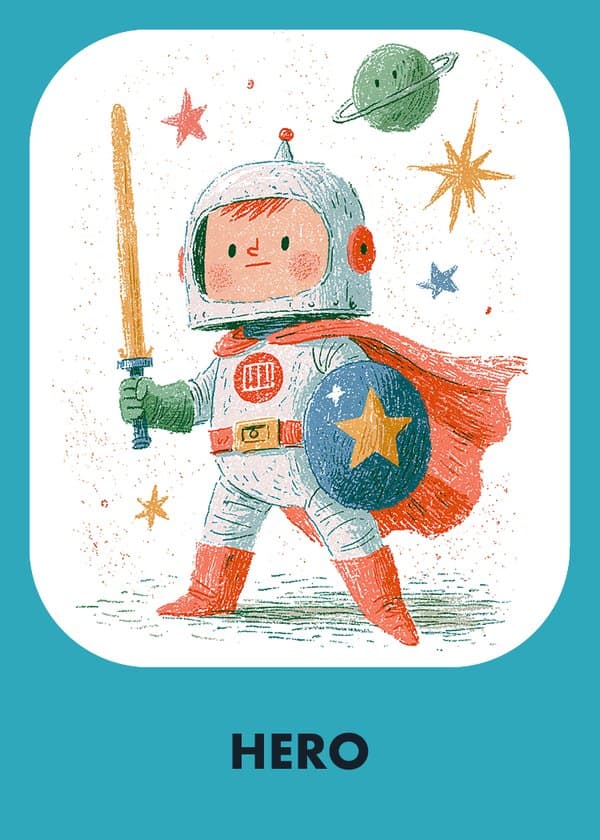
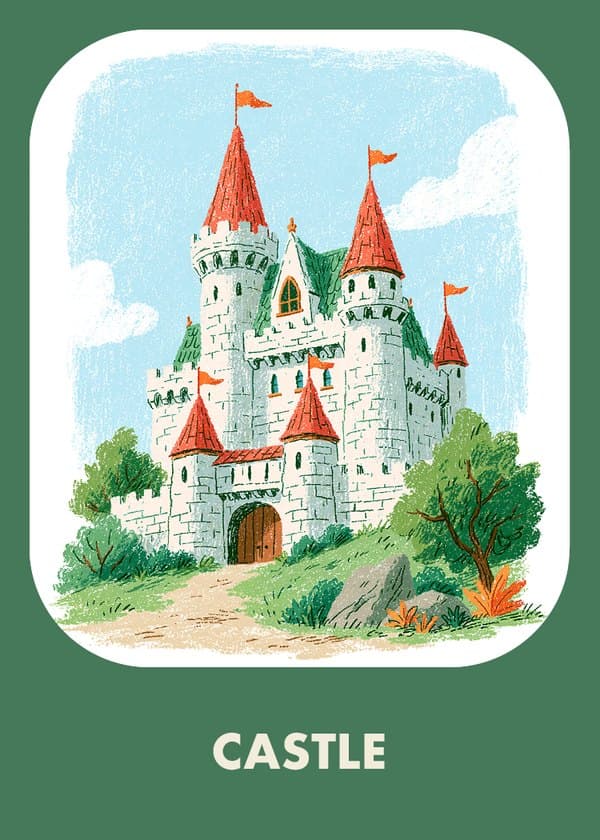
How To Play is an easy to learn guide and set of story cards that kickstart and guide imagination. It means you don't have to invent anything from scratch. Put the screens down, sit on the floor, pull out some toys, pick a card, and follow your child's lead.
Five categories, color coded. Poker size, so small hands can hold them. The cards are a jumping-off point, not a rulebook.
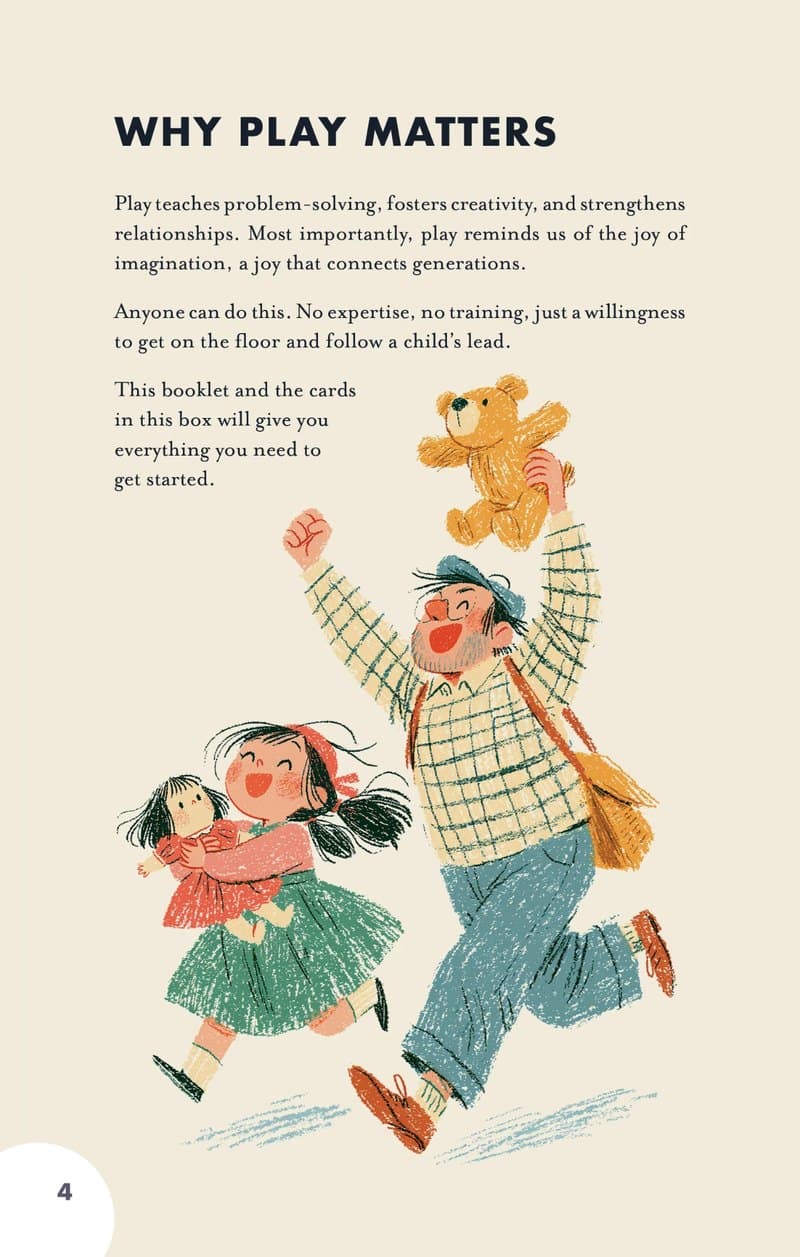
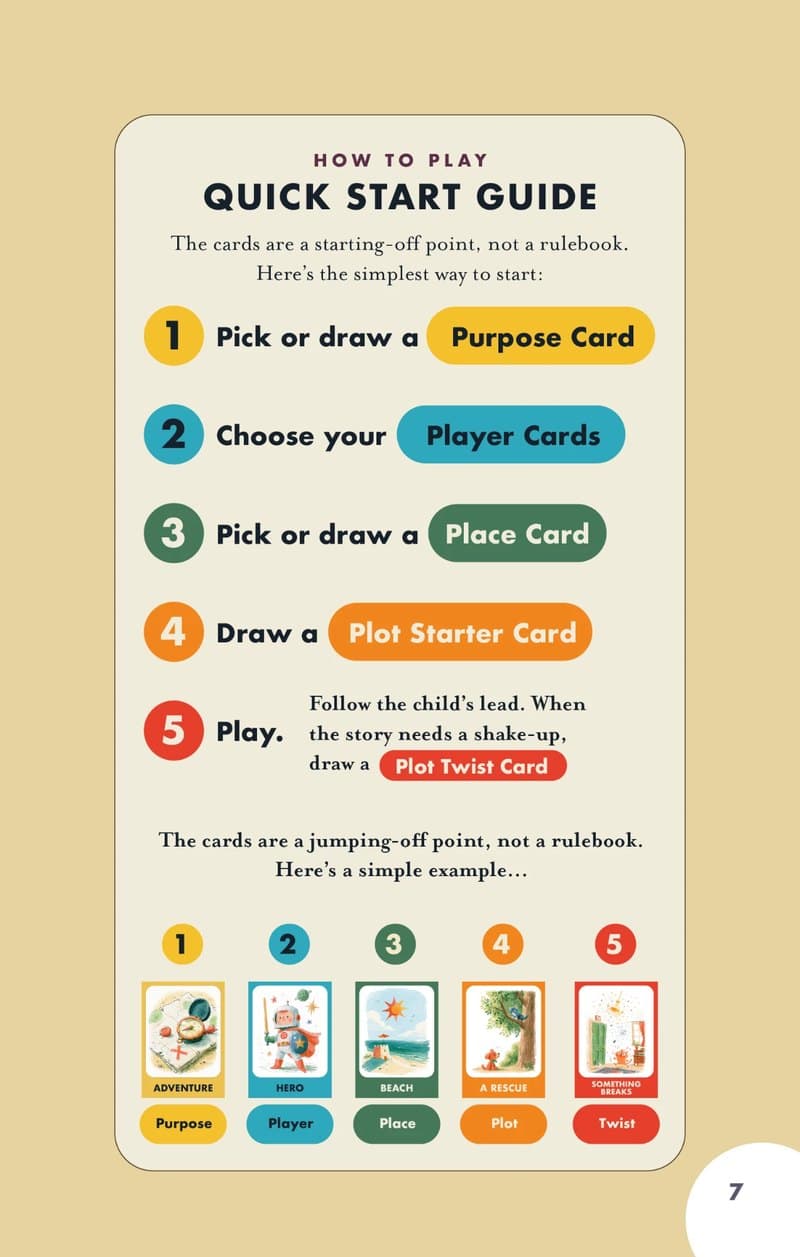
Your guide to putting it all together: a quick start, a full sample story, and tips for playing at every age.
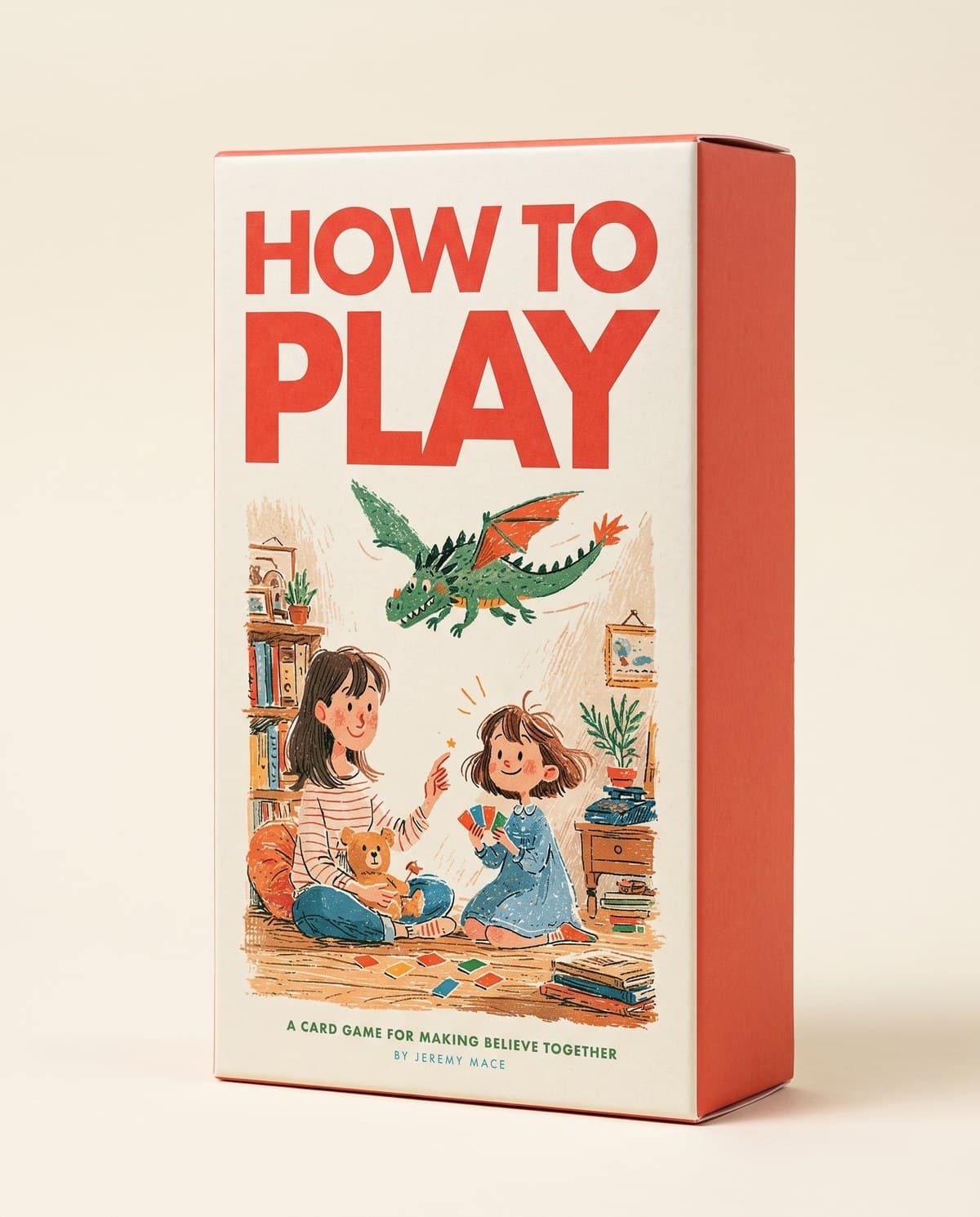
The deck lives in a rigid card case inside the game box, so it holds up to small hands and lives on the shelf between stories.
3 Purpose
The heart of the story: Adventure, Beauty, Battle
“Where should we go on our big adventure today?”
6 Player
Hero, Sidekick, Villain, Mentor, Joker, Support
“The one the story is about. Who is our hero today?”
12 Place
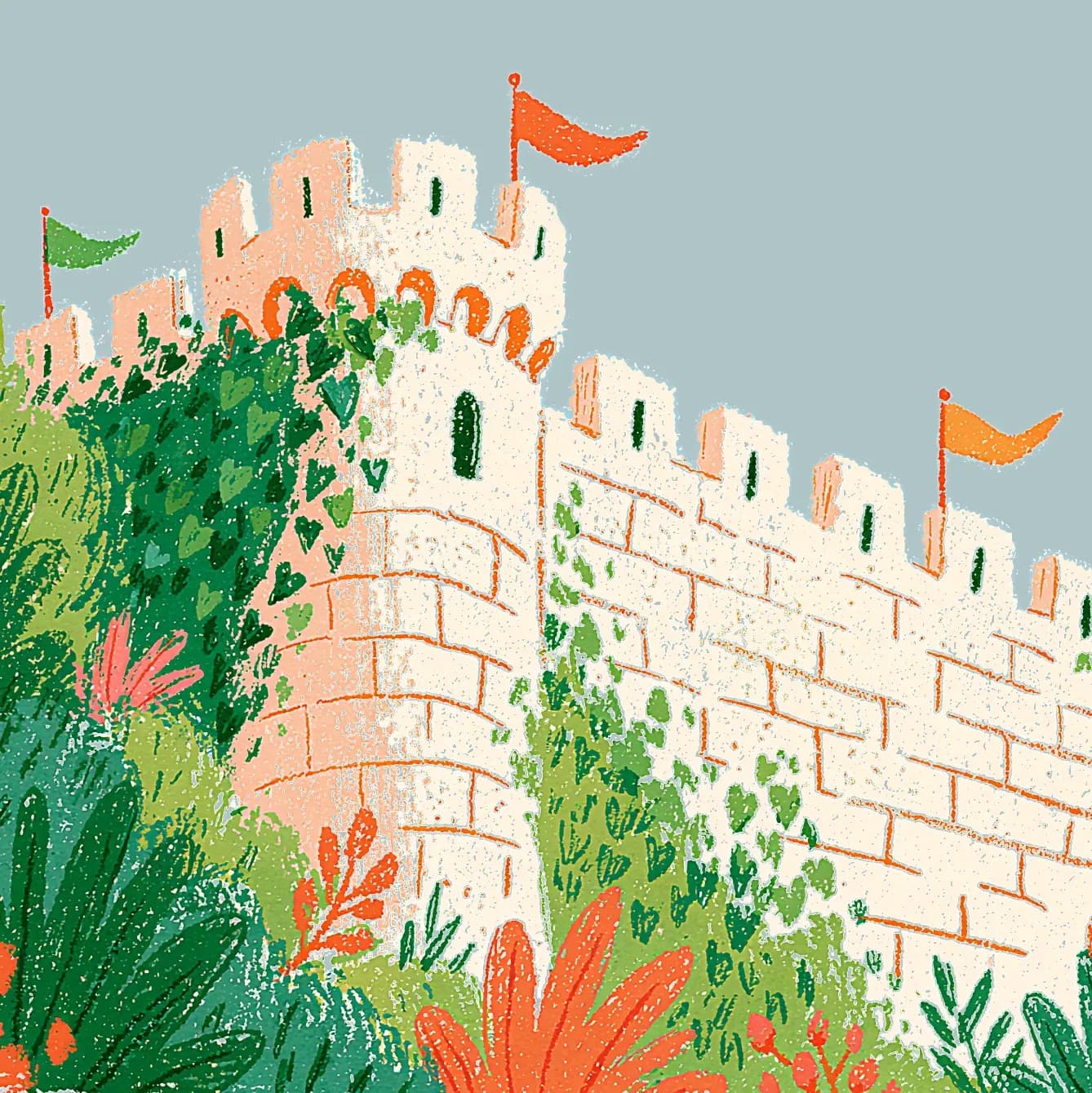
Jungle, Castle, Outer Space, and many more
“What does it look like here? What sounds do you hear?”
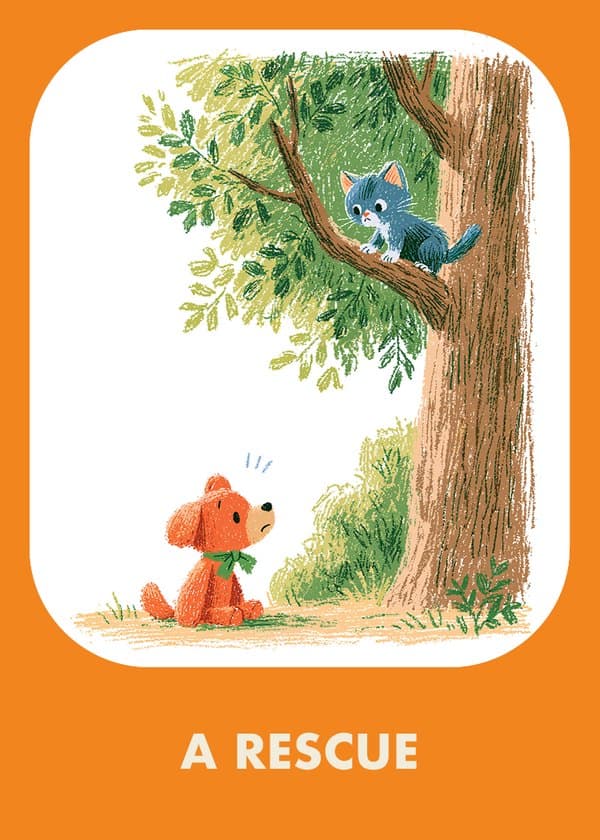
10 Plot Starter
How the story begins: Rescue, Escape, Discover the Treasure
“Someone is in trouble! Who needs saving, and where are they?”
5 Plot Twist
Surprises that change the story: Mishaps, Gifts, Monsters
“Oh no. The bridge just broke! How do we get across?”
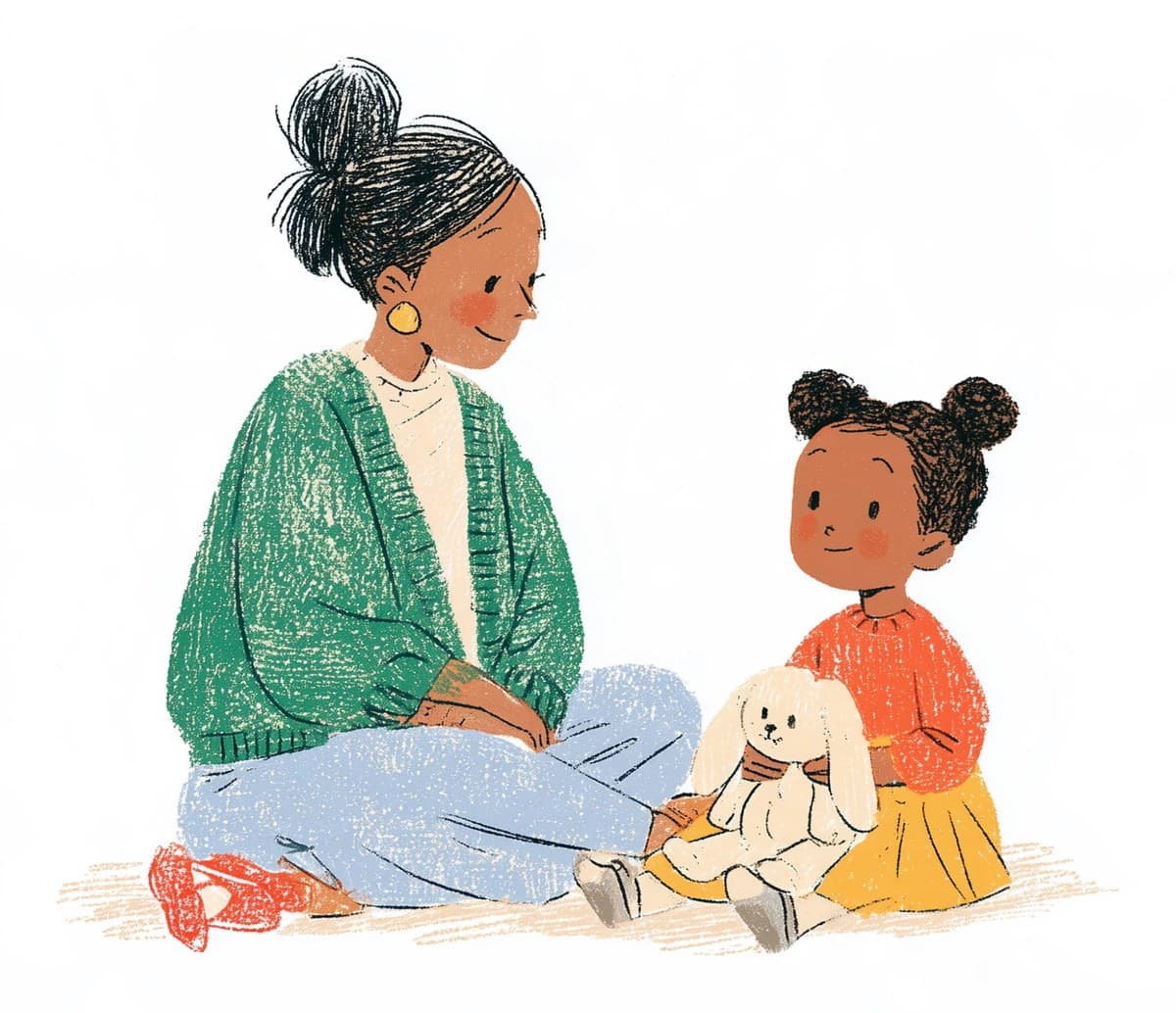
Grandma fans out the three Purpose cards: “Ellie, do we want to go on an adventure, make something beautiful, or be brave and fight a battle?” Ellie picks Adventure.
Bunny is the Hero. Should Dinosaur be the Sidekick or the Villain? “Sidekick! And the bad guy is... the couch.” Grandma rolls with it.
“We're in the jungle! Is it hot? Are there sounds?” “There's monkeys! And it's really really dark.” Grandma tosses a blanket over the coffee table. They're in the jungle.
“There's a treasure hidden somewhere in the jungle! Bunny, where should we look first?” Bunny hops across the pillows. They cross a river (the rug) and climb a mountain (the ottoman).
“Oh no. The bridge just broke! How do we get across?” Ellie thinks for a moment: “Dinosaur can fly! He never told anyone but he can fly!” The story ends with a feast of crackers and juice back at camp.
Grandma just had cards, a blanket, and a willingness to follow a four-year-old's lead.
Twenty-eight pages, and none of them long. It opens with why play matters and a quick start guide, walks through one example story from start to finish, then explains each of the Four Walls of Play: Purpose, Players, Place, and Plot. After that comes your role as the grown-up, tips for playing at every age from 2 to 7, and a page to write down the first stories you tell. Getting started takes about a minute. Pick a Purpose card, choose your Players, pick a Place, draw a Plot Starter, and play.
“It creates a space for them to engage with Dad in a way they don’t normally get to.”
Ross wasn’t sure this would work with James, who is 3 and usually wanders off before a game even gets started. Then the story got going. James picked his toys, and he was all in. The cards did their job as a starting point and got set down the moment his imagination took over. He has asked to play twice since.
Ross, dad of James (3)
Three rounds in, nobody needed the booklet.
Mariam and Corey played three rounds with five girls between 5 and 11: Sadie, Janie, Noelle, Naomi, and Nora. Round one leaned on the booklet. By round three the booklet stayed closed and the girls had taken over. 11-year-old Nora ran the game herself for the younger four, over an hour of play. The kids asked to play again and again!
Mariam and Corey, with five girls ages 5 to 11
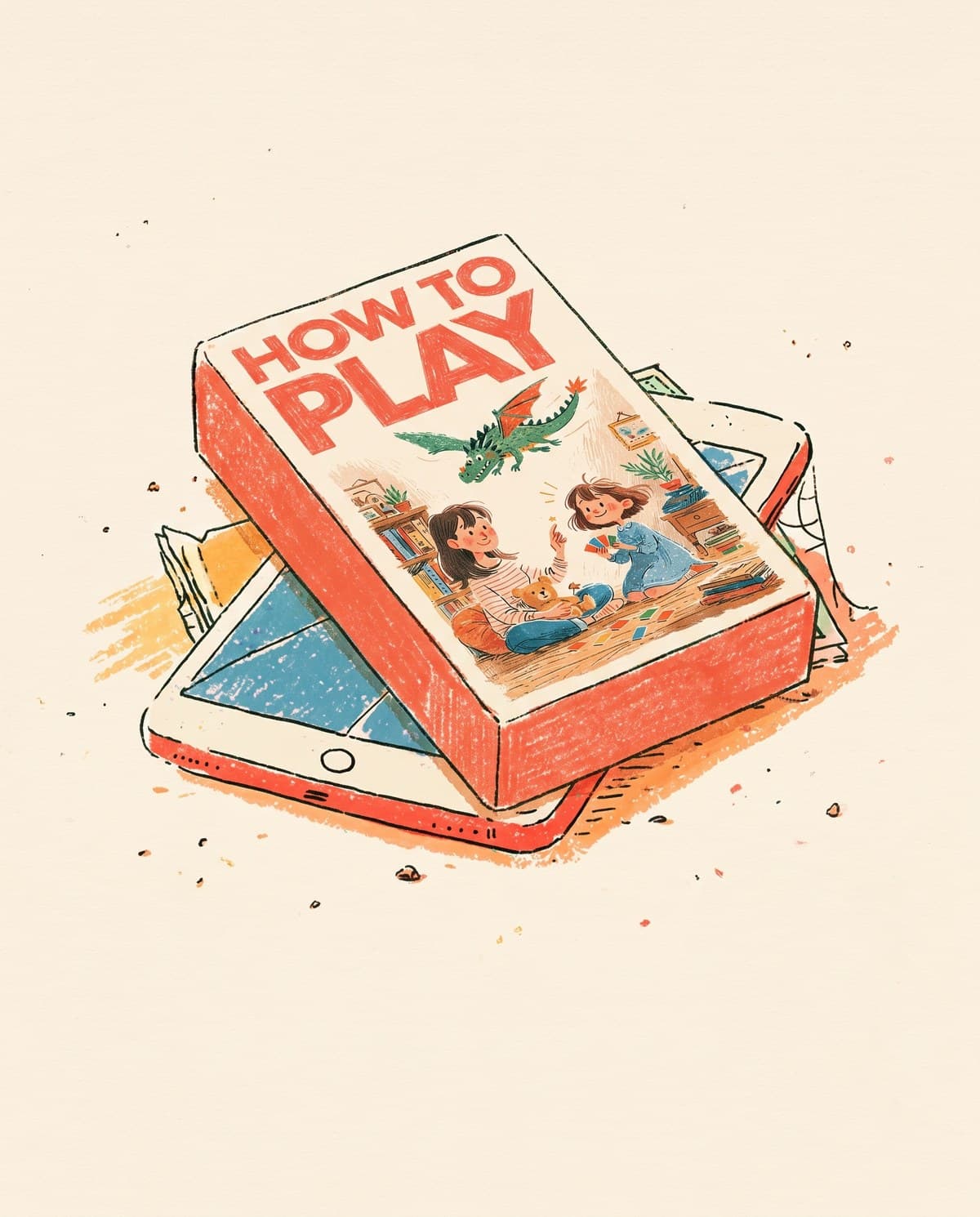
Nobody remembers a great afternoon of tablet time. Kids remember the day the couch was a pirate ship and Dad played the sea monster. How To Play gives you a reason to put the screens away, and something to do the moment they are down.